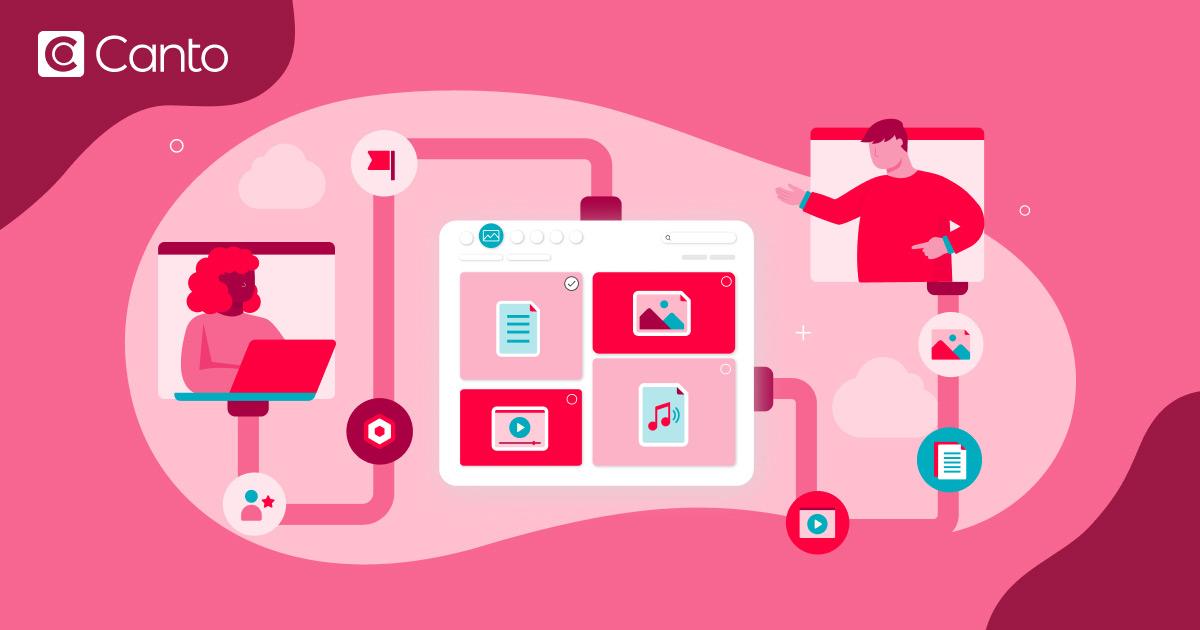
Digital Asset Management ist eine Software-Lösung, die Unternehmen dabei unterstützt, ihre digitalen Assets zentral zu speichern, zu organisieren und effizient zu verwalten. Ein DAM-System fungiert als zentrale Drehscheibe für alle Marken-Assets – von Bildern und Videos bis hin zu Dokumenten und Grafiken – und ermöglicht Teams den schnellen Zugriff auf die richtigen Dateien zur richtigen Zeit.
Mit DAM-Technologie können Unternehmen ihre Content-Workflows optimieren, die Markenkonformität sicherstellen und den ROI ihrer digitalen Inhalte maximieren.
Was ist ein DAM-System?
Ein Digital Asset Management-System ist eine cloudbasierte Plattform, die weit über einfache Cloud-Speicher hinausgeht und als zentrale Medienbibliothek für alle digitalen Assets eines Unternehmens dient. Die Software kombiniert leistungsstarke Suchfunktionen, automatisierte Workflows und intelligente Organisationstools, um Content-Teams, Marketing-Abteilungen und Marketing Asset Management bei der effizienten Arbeit mit digitalen Inhalten zu unterstützen.
Kernvorteile auf einen Blick:
- Zentralisierte Asset-Verwaltung statt dezentralem Dateichaos
- KI-gestützte Suche und automatische Verschlagwortung
- Verbesserte Zusammenarbeit zwischen Teams und Standorten
- Ermöglicht kollaborativen Marketing-Erfolg über alle Abteilungen
- Schutz der Markenidentität durch Zugriffskontrollen
- Messbarer ROI durch optimierte Content-Workflows
- Entdecken Sie alle Vorteile von Digital Asset Management im Detail
Hauptfunktionen von DAM-Systemen
Zentrale Asset-Bibliothek
Ein DAM-System vereint alle digitalen Inhalte in einer sicheren, cloudbasierten Umgebung und löst Dateiverwaltungsprobleme dezentraler Teams. Teams können Hunderte von Dateiformaten hochladen, organisieren und verwalten – von hochauflösenden Bildern bis hin zu komplexen Videodateien. Spezialisiertes Video Asset Management und diverse Audiodateitypen werden für Multimedia-Content unterstützt.
KI-gestützte Suche und Metadaten
Moderne DAM-Lösungen nutzen künstliche Intelligenz für automatische Verschlagwortung, Gesichtserkennung und kontextbezogene Metadaten-Generierung. Effizientes Metadaten-Management durch KI-Automatisierung und erweiterte Bilderkennung finden Mitarbeiter benötigte Assets in Sekundenschnelle mit KI-gestützter Suche, auch in umfangreichen Medienbibliotheken.
Canto AI Visual Search
Die modernste KI-Suche entdecken
Workflow-Management und Freigaben
Integrierte Genehmigungsworkflows beschleunigen die Zusammenarbeit zwischen Kreativ-Teams, Marketing und Management. Versionskontrolle und Asset-Historie gewährleisten, dass immer die aktuellsten, freigegebenen Inhalte verwendet werden.
Zugriffssteuerung und Markenkonformität
Granulare Benutzerrechte und Digital Rights Management schützen sensible Inhalte und stellen sicher, dass nur autorisierte Personen Zugriff auf spezifische Assets haben. Integrierte Styleguides fördern die Markenkonformität.
Nahtlose Integrationen
DAM-Plattformen integrieren sich direkt in bestehende Design-Tools, Content Management Systeme und Marketing-Plattformen, wodurch Medienbrüche vermieden und Produktivität gesteigert wird. Umfassende Integrationen ermöglichen nahtlose Workflows und Analyse- und Verteilungsfunktionen für datengestützte Entscheidungen. Professionelle Asset-Portale unterstützen die Zusammenarbeit mit externen Partnern.

Einsatzmöglichkeiten für DAM-Software
Marketing-Teams
Marketing-Abteilungen nutzen DAM-Systeme, um kampagnenrelevante Assets schnell zu lokalisieren, markenkonformen Content zu erstellen und Multi-Channel-Kampagnen effizienter zu realisieren. Marketing-Teams können so ihre Inhaltsproduktion skalieren und die zentrale Asset-Verwaltung beschleunigt Time-to-Market erheblich.
Brand Management
Für Brand Manager fungiert das DAM-System als zentrale Quelle der Wahrheit für alle Marken-Assets. Zentrale Verwaltung aller Marken-Assets und CI-Elemente, Styleguides, Logo-Varianten und CI-konforme Vorlagen sind jederzeit verfügbar und schützen die Markenidentität über alle Kanäle hinweg. Gewährleistet Markenkonsistenz über alle Kanäle und schafft konsistente Markenerlebnisse über alle Touchpoints. Professionelles Brand Management wird so erheblich vereinfacht.

Kreativ- und Content-Teams
Kreative nutzen DAM-Lösungen für nahtlose Asset-Erstellung, kollaborative Projektarbeit und automatisierte Content-Distribution. Die Integration in Adobe Creative Suite und andere Design-Tools eliminiert zeitraubende Dateiensuche.
Vertriebsteams
Sales-Teams greifen über DAM-Systeme auf aktuelle Produktinformationen, Verkaufsunterlagen und Präsentationsmaterialien zu. Selbstbedienungs-Portale ermöglichen schnellen Zugang zu den benötigten Ressourcen ohne IT-Anfragen. DAM als Vertriebswerkzeug steigert die Sales-Effizienz messbar.
Branchen, die DAM-Systeme einsetzen
E-Commerce und Einzelhandel
Online-Händler verwalten Tausende von Produktbildern, 360°-Ansichten und Marketingmaterialien über DAM-Systeme. Automatisierte Workflows für Produktkataloge und Multi-Channel-Veröffentlichung steigern die Verkaufseffizienz erheblich. Einzelhandelsunternehmen profitieren besonders von der Skalierbarkeit.
Medien und Unterhaltung
Medienunternehmen organisieren umfangreiche Video-, Audio- und Bildarchive über spezialisierte DAM-Lösungen. Schnelle Recherche und Lizenzmanagement sind essentiell für zeitkritische Produktionen.

Fertigungsindustrie
Industrieunternehmen nutzen DAM für technische Dokumentationen, Produktfotografie und internationales Marketing. Besonders bei globalen Markteinführungen beschleunigt zentrales Asset-Management die Prozesse. Hersteller können so ihre Markenpräsenz weltweit stärken.
Agenturen und Dienstleister
Kreativagenturen verwalten Client-Assets, Kampagnenmaterialien und Pitch-Präsentationen über DAM-Systeme. Client-spezifische Portale ermöglichen transparente Zusammenarbeit und professionelle Präsentation. Agenturen schätzen besonders die kollaborativen Workflows.
Medien und Unterhaltung
Medien- und Unterhaltungsunternehmen verwalten umfangreiche Medienbibliotheken über spezialisierte DAM-Lösungen. Schnelle Recherche und Lizenzmanagement sind essentiell für zeitkritische Produktionen und Content-Distribution.
Gemeinnützige Organisationen
Gemeinnützige Organisationen maximieren Kampagnen-Impact mit begrenzten Budgets durch effiziente Asset-Verwaltung. DAM-Systeme helfen dabei, die Reichweite und Wirksamkeit jedes Contents zu optimieren.
Reise und Hotelgewerbe
Die Reise- und Hotelbranche nutzt DAM für Destination Marketing und überzeugende visuelle Erlebnisse. Mitarbeiter und Partner erhalten Zugriff auf hochwertige Markenbilder für Marketing und Vertrieb.

Das richtige DAM-System auswählen
Bedarfsanalyse durchführen
Ermitteln Sie zunächst die spezifischen Anforderungen Ihrer Organisation: Welche Asset-Typen müssen verwaltet werden? Wie viele Nutzer benötigen Zugriff? Welche Integration sind erforderlich? Eine gründliche Bedarfsanalyse bildet das Fundament für die richtige Systemauswahl.
Entscheidungskriterien definieren
- Skalierbarkeit: Das System muss mit Ihrem Unternehmen mitwachsen können
- Benutzerfreundlichkeit: Intuitive Bedienung reduziert Schulungsaufwand
- Integrationsfähigkeit: Nahtlose Anbindung an bestehende Tools ist essentiell
- Sicherheit: Compliance-Anforderungen müssen erfüllt werden
- Support: Qualifizierter technischer Support gewährleistet reibungslose Nutzung
- Investition: Transparente Preisgestaltung und nachvollziehbare ROI-Berechnung
Anbieter evaluieren
Führen Sie Pilotprojekte mit 2-3 präferierten Anbietern durch. Testen Sie die Systeme mit realen Anwendungsfällen und beziehen Sie alle relevanten Stakeholder in den Evaluierungsprozess ein. Referenzkunden aus ähnlichen Branchen geben wertvolle Einblicke in die Praxistauglichkeit. Lesen Sie Kundenerfahrungen und Bewertungen verschiedener DAM-Lösungen.
Warum Canto die beste DAM-Lösung ist
Canto’s Digital Asset Management-Plattform kombiniert intuitive Bedienung mit leistungsstarker KI-Technologie. Unsere Lösung wurde speziell für die Anforderungen moderner Content-Teams entwickelt und bietet branchenführende Features für maximale Produktivität und ROI.
Jetzt kostenlos testen oder unseren DAM-Leitfaden herunterladen, um mehr über die strategischen Vorteile von Digital Asset Management zu erfahren.
DAM für Einsteiger – ein Leitfaden
Ihre kostenlose Einführung ins Thema steht bereit.
Häufig gestellte Fragen
Die Kosten für DAM-Software variieren je nach Funktionsumfang, Nutzerzahl und Speicherbedarf. Investitionen amortisieren sich typischerweise innerhalb von 6-12 Monaten durch gesteigerte Produktivität und reduzierte Content-Kosten.
Standard-Implementierungen benötigen 4-8 Wochen, abhängig von der Komplexität der Migration und den erforderlichen Integrationen. Canto unterstützt Sie mit einem dedizierten Implementierungsteam für einen reibungslosen Start.
Moderne DAM-Lösungen entsprechen höchsten Sicherheitsstandards mit Verschlüsselung, Zugriffskontrollen und Compliance-Features. Canto erfüllt internationale Sicherheitszertifizierungen und Datenschutzbestimmungen.
Während CMS-Systeme primär für Website-Content optimiert sind, fokussieren sich DAM-Lösungen auf die Verwaltung aller digitalen Assets. Erfahren Sie mehr über die Unterschiede zwischen DAM und CMS.