
Agentic digital asset management: The complete guide
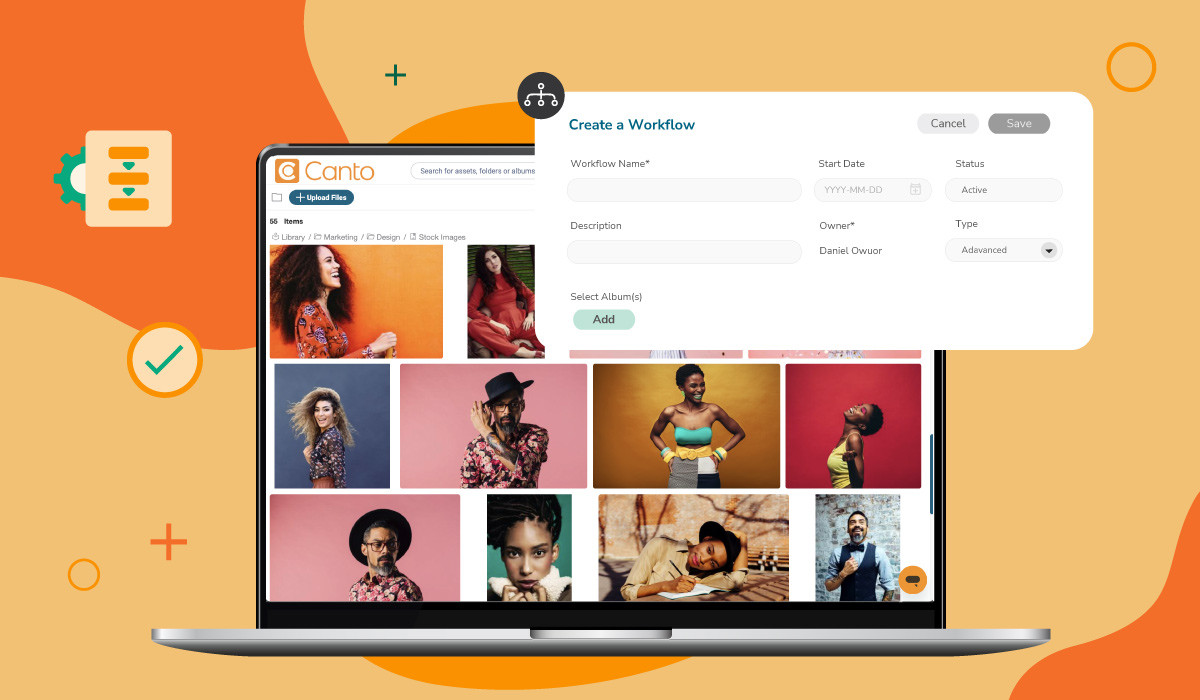
Agentic digital asset management (agentic DAM) is a category of DAM platform in which AI agents (software systems capable of reasoning, planning, and executing multi-step tasks) operate autonomously within your content library to enrich, govern, and distribute assets without requiring manual initiation for every action. Unlike a passive DAM that stores assets and waits, an agentic DAM proactively monitors library health, completes workflows at ingest, and routes content to the right channels and systems before a human has to ask.
The shift from assistive to autonomous is why agentic DAM has emerged as the defining conversation in content operations. Marketing teams managing large complex asset libraries are hitting the limits of what reactive systems, however feature-rich, can deliver. This guide explains what agentic digital asset management actually is, how it differs from traditional and AI-powered DAM, how the technology works, and what to look for when evaluating platforms.
What is agentic digital asset management?
Agentic digital asset management is a DAM architecture in which purpose-built AI agents, each specialized for a specific content operations function, work together under human direction to manage the full content lifecycle: enrichment, compliance, discovery, and distirbution.
The term “agentic” refers to AI agency: the ability of a software system to receive a goal, break it into steps, make decisions based on context, and execute those steps in sequence. In a DAM, this means the system doesn’t wait to be told what to do with each asset. It understands the state of your library, identifies what needs attention, and takes action.
A practical example: when a batch of assets is uploaded to an agentic DAM, the system doesn’t just store them. It enriches each asset’s metadata based on your taxonomy, validates against brand guidelines, flags compliance gaps, links assets to relevant product records, and surfaces a readiness status. It does all of this before a human opens the first file. What used to be hours of manual follow-up becomes an automated, auditable workflow.

Agentic DAM vs. traditional DAM: What’s the real difference?
Traditional digital asset management platforms are passive by design. They provide a system of record; a centralized library where teams store, search, and retrieve assets. Every action requires human initiation. Problems, like missing metadata, expired rights, or incomplete records, surface only when they cause a downstream failure: a campaign launch with untagged assets, a partner portal with outdated content, or a product feed missing imagery.
The stakes are real. Knowledge workers spend an average of 1.8 hours per day searching for information (that’s nearly 25% of the working day). For content teams, managing thousands of assets across dozens of channels, that time compounds into significant cost and delay.
Agentic DAM flips the model from reactive to proactive:
| Capability | Traditional DAM | Agentic DAM |
|---|---|---|
| Action model | Waits for human input | Proactively surfaces and acts |
| Asset ingest | Stores what’s uploaded | Enriches, validates, and flags on upload |
| Library health | Visible only through manual audits | Monitored continuously with a live score |
| Search | Returns what’s tagged | Finds assets by visual similarity and context |
| Distribution | Manual exports and handoffs | Intelligent routing to channels and portals |
| AI stack access | Isolated from external AI tools | Accessible via MCP / API to your broader stack |
In other words, agentic DAM marks the defining shift from a system you manage to a system that manages the work on your behalf.
Agentic DAM vs. AI-powered DAM: Understanding the distinction
The distinction matters most for marketing teams already using a DAM with AI features, and the difference is worth being precise about.
AI-powered digital asset management incorporates AI capabilities into specific, bounded tasks, like automatic tagging, facial recognition, smart search, and content intelligence. These features deliver genuine value. They speed up individual tasks and reduce manual metadata entry.
But AI features operate in isolation. Each one is a point solution; it handles one task within its scope and stops. It doesn’t reason across your library, coordinate with other capabilities, or act proactively on your behalf.
Agentic digital asset management introduces a different layer: AI agents that pursue goals across multiple steps drawing on your full DAM environment (taxonomy, metadata, workflows, brand guidelines, distirbution channels, etc.) to execute complex operations end to end.
The practical difference is this:
- AI-powered DAM: Tags an uploaded image based on visual content analysis
- Agentic DAM: Detects the upload, tags it against your taxonomy, validates metadata, checks for compliance issues, links it to relevant product records, adds it to a distribution readiness queue, and surfaces a health signal (all in sequence, without a human touching a single field)
This distinction is also critical when evaluating platforms. Adding AI features to a traditional DAM architecture doesn’t create an agentic system. Agentic DAM requires an intelligence layer built into the platform’s core, one that coordinates specialized agents across the content lifecycle. A checklist of AI capabilities bolted onto a passive system is far from the same thing, and cannot yield the same results.
How agentic digital asset management works
An agentic DAM operates through a coordinated set of specialized agents, each purpose-built for a function within content operations. They run inside a DAM platform’s governed environment, respecting your permissions, approvals, and usage rights. Human-defined goals direct them, not static if/then rules.
The orchestration layer
At the center is the system that receives a goal, from a human prompt, a system trigger, or a proactive signal, determines which agents to engage, sequences their actions, and logs every step for audit. This is what makes agentic DAM different from rules-based automation: it adapts to context rather than following a predetermined path. Rules-based automation requires every scenario to be scripted in advance. Agents reason about the best path to a goal given the available context.
Specialized agents
Each agent handles a specific domain:
- Enrichment agents generate metadata at scale (tagging, descriptions, alt text, taxonomy mapping) across hundreds or thousands of assets simultaneously
- Compliance agents check assets against brand guidelines, rights restrictions, and regulatory requirements before they reach distribution
- Distribution agents assess which assets are ready for which channels and route them accordingly
- Governance agents monitor how assets are used externally, surfacing brand or rights issues before they escalate
Human oversight at critical points
Agentic doesn’t mean unattended. In a well-implemented agentic DAM, humans define the goal, set the parameters and guardrails, and confirm before significant operations execute. The agent handles volume and complexity. The human handles judgment. Every write is logged and reversible.
MCP and API integration
This is the architectural shift that makes agentic DAM foundational to an AI tech stack. A genuine agentic DAM platform exposes governed content to external AI tools, LLMs, and enterprise automation systems via Model Context Protocol (MCP) or API, in real time, within the platform’s permissions and approval structure. Your AI tools don’t work around your DAM; they query it directly for approved, current, governed content.
Key capabilities of an agentic DAM platform
When evaluating agentic DAM solutions, these are the capabilities that separate genuine agentic systems from platforms with AI features:
Library health monitoring
The system continuously tracks the state of your content library and surfaces a live readiness score. Admins see exactly which assets are incomplete, non-complian, or at risk (without running a manual audit). Problems are flagged before they create downstream failures.
Content readiness automation
Every asset entering the library goes through an automated readiness workflow: metadata enrichment, taxonomy validation, rights checking, channel readiness assessment. Upload is the beginning of the process not the end.
Visual search and contextual discovery
Assets are discoverable by visual similarity and context, not just by tags. This matters because large libraries always accumulate a “dark corner” (i.e., content that was never properly tagged and is invisible to keyword search). An agentic DAM’s AI-powered search makes the entire library accessible regardless of existing metadata quality.
Multi-agent orchestration
The platform can deploy multiple specialized agents that cooridnate across a single workflow. A single instruction, like “get my Autumn campaign assets ready for partner distribution”, can trigger enrichment, compliance checking, product linking, and portal setup without manual handoff between steps.
AI infrastructure access
Agentic DAM exposes governed content to external AI tools via MCP or API. This is what transforms the DAM from an isolated storage system into the content intelligence layer of your entire AI stack. IT becomes the source of truth that your AI tools actually trust and query.
The business case for agentic digital asset management
The ROI argument for agentic DAM is grounded in a specific problem: content volume scales faster than headcount can, and passive systems don’t help close that gap.
According to McKinsey, 88% of enterprises now use AI in at least one business function (up from 33% in 2024), which means your content library is increasingly being queried by AI tools that expect it to be organized, current, and accessible. This presents both revenue and efficiency problems that a passive DAM cannot solve because it doesn’t act, it only stores.
Agentic DAM, on the other hand, proactively solves the most pressing content problems of the AI era:
- Automated enrichment at scale eliminates asset-by-asset tagging
- Proactive library health monitoring prevents the downstream failures that manual audits miss
- Visual search and contextual discovery reduces the time teams spend finding or recreating assets
- Distribution readiness intelligence closes the gap between approved content and channel-ready content
The ROI is strongest for teams managing high-volume libraries across multiple channels, markets, or distribution partners (where the operational gap between what a passive DAM handles and what the business actually needs is widest). Learn more about what makes a DAM truly active and how the shift from passive to proactive changes content operations.
What to look for when evaluating agentic DAM platforms
Not every platform that uses the word “agentic” is built on a genuinely agentic architecture. These are the questions that separate authentic agentic systems from DAMs with AI features.
Is the intelligence layer native or integrated after the fact?
Agentic capabilities built into the DAM core have full access to your taxonomy, metadata, approval workflows, and brand rules from the start. AI capabilities added via third-party integration don’t have the same context, and that context is what makes agents accurate.
Does the system act proactively, or only when prompted?
A platform that requires a human to initiate every oepration isn’t agentic; it’s AI-assisted. Look for evidence of practive behavior: live library health scores, readiness flags surfaced without human queries, anomaly detection before problems reach distribution.
Can multiple agents coordinate across a single workflow?
The defining advantage of agentic DAM is orchestration. Ask vendors to demonstrate a multi-step workflow, not individual features in sequence. If each capability requires separate initiation, the system isn’t agentic.
Is human oversight built into the architecture?
Agentic AI should be human-led, not autonomous without oversight. Look for explicit confirmation steps before significant operations, complete audit logs, and configurable guardrails that keep humans in control of outcomes.
Does the platform function as AI infrastructure?
The most forward-looking agentic DAM platforms expose governed content to external AI tools via MCP or API, making the DAM a foundational layer in your AI stack. If the DAM operates in isolation from the rest of your AI tooling, that’s a ceiling on future ROI.
How does the vendor define content readiness?
Ask what “ready to distribute” means in their platform. A precise answer, with specific signals, criteria, and automation steps, indicates a mature content operations framework. A vague answer suggests AI features without operational depth.
Canto: Where agentic digital asset management becomes real
Most DAM platforms store your assets and wait, but the age of passive storage is over.
The shift that defines agentic DAM isn’t really about technology. It’s about who (or what) carries the operational weight of keeping a content library working. For years, that weight defaulted to the people closest to the assets: the content managers, the creative ops leads, the brand team members spending Friday afternoon auditing metadata no one else had time to fix. Agentic DAM doesn’t just automate those tasks. It changes who the system is designed to serve.
Canto was built on the premise that a DAM should be the most active member of. your content team, not a glorified filing cabinet that answers when asked, but a system with a continuous ambient awareness of what your library contains, what it’s missing, and what it’s ready to do. That’s the true meaning of active DAM or agentic DAM: a fundamentally different relationship between your content and the team that depends on it.
Frequently asked questions about agentic digital asset management
What is agentic DAM?
Agentic DAM is a digital asset management platform in which AI agents pursue human-defined goals to autonomously perform content operations tasks: metadata enrichment, compliance checking, distribution readiness. Unlike traditional DAM, which requires human initiation for every action, an agentic DAM continuously monitors library health, completes asset workflows at ingest, and routes content to channels and systems without waiting to be asked.
How is agentic DAM different from AI-powered DAM?
AI-powered DAM incorporates AI capabilities into specific, bounded tasks, like auto-tagging, smart search, and content intelligence, that each operate with a fixed scope. Agentic DAM introduces AI agents that can reason across your entire library, coordinate multi-step operations, and pursue goals end to end. The difference is between a tool that completes a task and a system that manages a workflow.
What do AI agents in a DAM actually do?
Agents in an agentic DAM can enrich asset metadata at scale, check assets against brand guidelines and compliance policies, surface library health signals before issues reach distribution portals, and expose governed assets to external AI tools via MCP or API. The specific capabilities depend on which agents are deployed and how they’re configured.
Is agentic DAM only for enterprise teams?
No. While enterprise teams with large, complex libraries realize ROI fastest, the core problems agentic DAM solves (manual enrichment, reactive library management, slow distribution) exist at every scale. Mid-market marketing teams running lean content operations see significant efficiency gains from automation and proactive monitoring.
What’s the difference between agentic DAM and automation?
Rules-based automation is deterministic: if X happens, do Y. It requires every scenario to be scripted in advance and cannot handle ambiguity. Agentic DAM uses AI agents that reason toward a goal based on available context, meaning they can handle complex, nuanced operations that rules-based automation would require dozens of separate rules to address.