
Branded content: What it is, examples, and strategy
Branded content is a marketing format in which a brand creates or sponsors content (videos, podcasts, articles, or social series) that delivers entertainment, education, or emotional value to its audience rather than promoting a product directly. Unlike traditional advertising, branded content leads with the story, not the sale. The brand’s name may appear, but the primary experience is the content itself. This format sits at the intersection of media and marketing: it competes for attention the way editorial content does, not the way an ad does. When done well, branded content builds trust and brand recall at a depth that display advertising cannot replicate.
What makes content “branded”?
Not all content a brand produces is branded content. A product page is advertising. A how-to guide is content marketing. Branded content sits in its own category, defined by its intent and audience experience more than its format.
Three criteria separate branded content from other marketing disciplines:
- Audience value comes first. The content must entertain, educate, or inspire on its own terms.
- The brand is present but not the hero. The story, a shared value, or the audience’s problem takes center stage. The brand’s role is that of enabler or narrator, not protagonist.
- It earns attention rather than buying it. Branded content competes in the same attention economy as editorial media. It lives or dies on whether it is genuinely worth watching, reading, or sharing.
This distinction matters because it changes how success is measured. Branded content is not optimized for click-through rate. Instead, it’s measured by reach, engagement depth, sentiment, and (over time) brand equity.
Why branded content marketing works
The effectiveness of branded content is grounded in how people build trust. Audiences are conditioned to ignore or skip ads. Branded content bypasses that resistance because it does not trigger the same defensive response.
Audiences engage with branded content more deeply than with traditional ad formats, and the associations formed through content are more durable than those formed through interruption-based advertising.
The underlying mechanism is simple: when content delivers real value, the brand that produced it earns a positive association. That association compounds over time. Audiences begin to see the brand as a thought leader, a trusted voice, or a community anchor, instead of just a vendor. That shift in perception is what separates branded content from your run-of-the-mill, ad-heavy campaign.
Types of branded content
Branded content is format-agnostic. What matters is that the content delivers standalone value. The most common formats include:
- Video series and documentaries: Long-form storytelling with high production value; strong for emotional connection and earned media
- Podcasts: Recurring audio programming built around a theme that matters to the brand’s audience, not around the brand itself
- Editorial and long-form articles: Research-driven or narrative pieces published on owned channels or in partnership with media outlets
- Social series: Episodic content built for a specific platform, designed around a recurring concept or character
- Interactive content: Assessments, quizzes, or data visualizations that give audiences a personalized, shareable result
Format should follow audience behavior and distribution channel best practices, not whatever is easiest to produce. The best branded content formats are ones a team can sustain consistently and that survive beyond a singular launch moment.
Branded content examples
The most effective branded content campaigns share one quality: the content would be worth consuming even if you removed the brand entirely.
Red Bull Media House
Red Bull is the defining example of branded content executed at scale. Red Bull Media House (the brand’s in-house content studio) produces documentaries, live event coverage, and athlete-driven video series that rival professional sports media. The product rarely appears. What appears instead is extreme sports, human performance, and adventure culture. Red Bull’s audience follows the content; the brand is embedded in the identity of the community that forms around it.
Dove Real Beauty
Dove’s Real Beauty campaign is among the most-studied examples in branded content marketing. Its short files, including “Evolution” and “Real Beauty Sketches”, did not advertise soap. They examined cultural standards of beauty, produced content that sparked genuine public conversation, and positioned Dove around a values platform that competitors could not easily replicate. The content was shared and discussed independently of the brand, which is the hallmark of branded content done right.
Salesforce Salesblazer
Salesforce’s Salesblazer content hub is a strong B2B example of branded content strategy executed at scale. Rather than producing one-off campaigns, Salesforce built an ongoing content hub, complete with podcasts, articles, and video interviews, specifically for sales professionals. The brand positioned itself as the trusted resource for an entire professional community. the content does not sell Salesforce. It serves Salesforce’s audience. That distinction is the core of the branded content model.
How to build a branded content strategy
Branded content without a strategy produces expensive assets that no one finds. A branded content strategy is also a content operations challenge: your workflow, tools, and distribution systems need to support the creative process. A repeatable strategy has four components.
Define your audience’s passion points
Branded content works when it connects a brand’s expertise to something the audience already cares about. Start with an audience audit: what does your audience read, watch, and share? What problems do they want solved? What communities or interest do they claim outside of their professional role? The intersection of your brand’s knowledge and your audience’s genuine interests is where your content belongs.
Choose a format and commit to a cadence
One-off branded content pieces rarely build the recall or trust that a consistent series does. Choose a format your team can sustain (a quarterly documentary, a biweekly podcast, a monthly editorial feature) and commit to a publishing cadence. Episodic content compounds: each piece builds the audience that receives the next one.
Distribute with channel strategy built in
Creating the content is only half the work. A distribution plan should exist before production begins, not after. Identify where your audience discovers content: search, social, partner media, newsletters. Then, build each asset with that channel in mind. A podcast episode should produce show notes, audiograms, and social clips. A documentary should produce editorial excerpts and a trailer. Plan the content family before you produce the anchor piece.
Measure what matters for branded content
Branded content metrics are not the same as demand generation metrics. Track reach, video completion rate, shares, and audience sentiment alongside direct response signals. Over a longer horizon, track brand lift: aided and unaided awareness, brand favorability, and share of voice in your category. These are the indicators that branded content moves.
How a DAM platform powers your branded content strategy
Branded content is asset-intensive by nature. A single campaign generates dozens of digital assets: raw footage, edited cuts, transcripts, thumbnails, photography, motion graphics, brand guidelines, and distribution-ready files in multiple formats and aspect ratios. Without a system to manage those assets, teams waste hours locating files, risk publishing off-brand or outdated versions, and lose the ability to efficiently reuse content across campaigns.
A digital asset management (DAM) platform like Canto creates the operational foundation that makes branded content scalable. Here’s how:
Discoverability. Every asset in a DAM is tagged, searchable, and retrievable in seconds. When a campaign produces hundreds of assets, your team can find the right version (by format, campaign, channel, or usage rights) without asking a colleague or digging through shared drives.
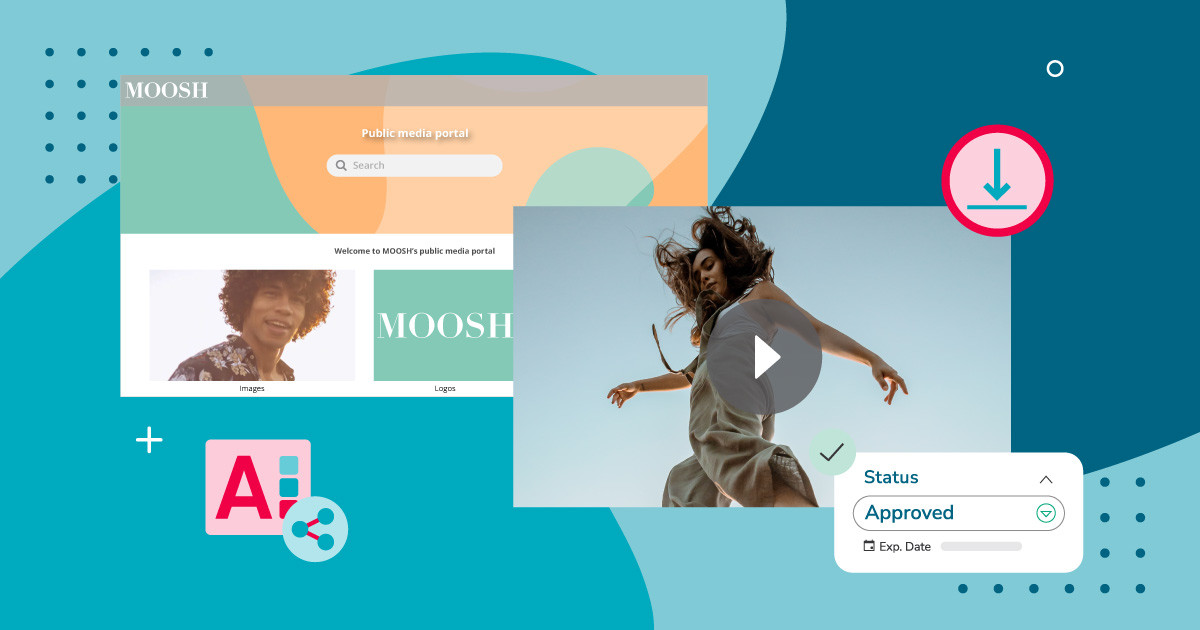
Brand governance. A DAM streamlines brand management and enforces brand consistency by making approved assets the default. Teams distribute content through brand portals, ensuring internal teams and external partners access current logos, approved photography, campaign files, whatever they need (and can’t accidentally publish outdated versions).
Distribution efficiency. DAM platforms like Canto integrate directly with the tools your team uses to publish and distribute content, like CMS platforms, creative suites, and social tools, so assets move from production to channel without cumbersome manual handoffs or re-uploading.
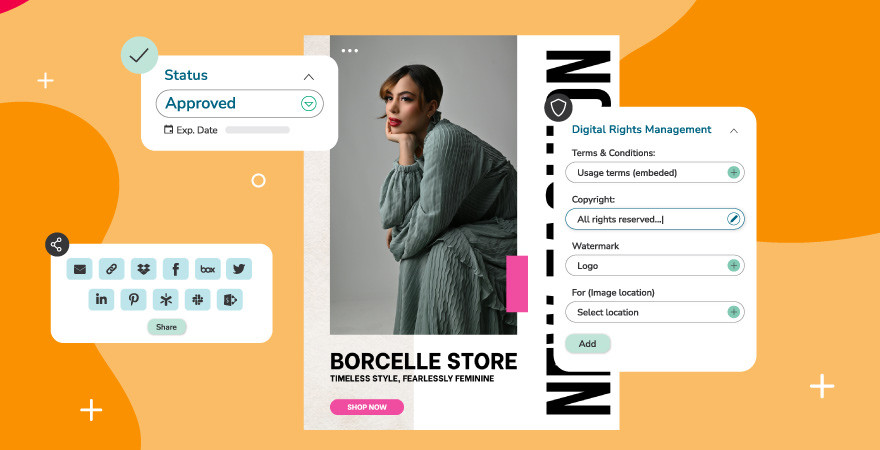
Rights management. Branded content frequently involves talent, licensed music, or co-produced assets with partners. A DAM tracks usage rights and expiration dates, reducing legal exposure for teams publishing at volume.
For teams producing branded content at scale, a DAM is the infrastructure that makes consistency and efficiency possible across every campaign.
Frequently asked questions
What is branded content? Branded content is content (video, audio, written, or interactive) that a brand creates or sponsors to deliver genuine value to its audience. Unlike advertising, the primary experience is the content itself. The brand’s role is to fund, produce, or present the content, not to be the subject of it.
What is the difference between branded content and content marketing? Content marketing is a broad strategy of creating useful content, like blogs, guides, and whitepapers, to attract and retain an audience, typically optimized for search. Branded content is a specific format within that strategy. It prioritizes entertainment or emotional resonance over utility, and is measured by reach and brand lift rather than organic search performance alone. Both serve the same long-term goal, but through different mechanisms.
What are some examples of branded content? Well-known examples include Red Bull’s sports documentaries through Red Bull Media House, Dove’s Real Beauty film series, Salesforce’s Sales blazer editorial hub, and Patagonia’s environmental films. The common thread across all examples: each would be worth consuming even if the brand’s name were removed entirely.
What makes a branded content strategy successful? The most effective branded content strategies are audience-first, consistent over time, and built around a clear distribution plan. They are also operationally sound, built on systems that allow teams to manage, govern, and reuse assets without friction across every channel and campaign, like a digital asset management system.