Product information management: PIM explained, how it works, & top features
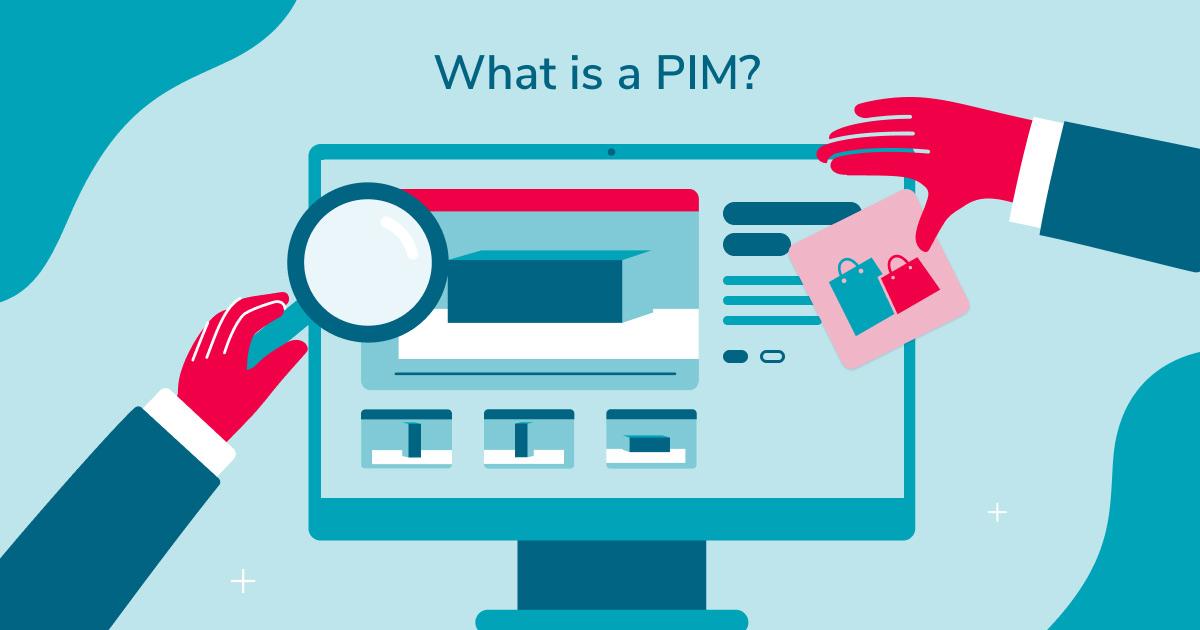
A product information management (PIM) system centralizes, organizes, and distributes product information, like product descriptions, pricing, and other product attributes, across teams and channels. Products like Canto DAM for Products store, manage, and distribute both digital assets and product information within one platform, streamlining GTM alignment, operational efficiency, and content ROI.
How does PIM work?
PIM systems centralize product information into a single platform, allowing businesses to gather and enrich product attributes from various sources. PIM systems also ensure information accuracy and consistency through missing data field alerts, team member accessibility, and integrations with digital asset management (DAM) platforms. Once attributes are fully prepared, PIM systems distribute them across sales and marketing channels, such as Shopify and Amazon, while automatically tailoring attributes to align with each channel’s unique requirements.
What are the benefits of PIM systems?
Depending on your business, there are multiple benefits of PIM systems:
Centralized product data
A PIM system centralizes product data, making it easier to manage, update, and maintain. Managing product data from one place reduces the risk of errors and inconsistencies across channels.
Enhanced customer experience
PIM systems ensure your product data is consistent and complete across all channels, which leads to a better customer experience.
Accelerated time-to-market
A PIM solution streamlines workflows and automates repetitive tasks, accelerating products to market.
Improved omnichannel marketing
With a PIM system, accurate and formatted product feed information can be easily distributed to e-commerce sites, social media, print catalogs, and more.
Assisted industry compliance and regulation
PIM systems manage accurate product information that is required for labeling, safety, or technical specifications, helping maintain necessary compliance and regulation needs.

Top PIM system features
PIM systems transform how you manage product information from the ground up. Check out the top PIM solution features:
Product attribute fields
Customizable product attribute fields let you organize your data clearly using organization-specific terms. You can customize the key data fields to reflect any information that is important to sell your products, whether it be the product description or shipping information.
Channel mapping
Channel mapping ensures that your product attributes align with retailer terms, eliminating the need for tedious backend adjustments. Product attribute names tend to vary between businesses and retailers, even within the same industry. With a PIM system in place, you can “set and forget” these header correlations, streamlining product feed management.
Digital catalogs
Catalogs are a way to curate product subsets from your line, whether that be your newest drops or old favorites. Any comprehensive PIM solution will offer features for digital catalog management designed to make it easy to share products in a simple, on-brand way.
How does a PIM system help with e-commerce?
PIM systems help distribute accurate product attributes in the right formats to e-commerce platforms, removing the need for tracking product data with spreadsheets and manually updating each storefront’s product information.
Let’s look at a few examples of PIM for e-commerce.
Clothing manufacturer
If you manufacture a line of women’s sportswear, you could use a PIM system to catalog your products.
You could organize your entire line with item descriptions, sizes, colors, materials, care instructions, labeling, marketing and promotional materials, supply chain management, distribution information, and more — for every single item. From there, you could distribute this information to all your various sales, marketing, and distributor channels, which likely includes e-commerce storefronts.
Since you used a PIM system to centralize and distribute your product information, your distributors will receive accurate product attributes in the correct storefront formats.
Chocolate retailer
Let’s say you’re a chocolate retailer with an e-commerce website and a retail presence in brick-and-mortar stores. You could use a PIM system to:
- List your entire line of products
- Manage ingredient information
- Store packaging details
- List accurate nutritional information
- Manage compliance with different certifications (e.g., Fair Trade, organic, or non-GMO)
Finally, you could use a PIM system to share accurate product information with all sales, marketing, and other e-commerce channels.
Comparing PIM vs. other systems
Listed below are some comparisons between PIM vs. other systems:
What is the difference between PIM vs. CMS?
- PIM: For managing product attributes across multiple teams and storefronts
- CMS: For managing the creation and editing of websites and web pages in an easy-to-use interface
What is the difference between PIM, DAM, and CMS?
PIM, DAM, and CMS solutions all serve different purposes. PIM systems help teams centralize, organize, and distribute product attributes across channels and teams. If comparing PIM vs DAM, DAM systems help centralize your digital asset library, brand management, version control, and content distribution. CMS platforms make it easy to create, manage, and publish website content.
What is the difference between DAM, PIM, and MRM?
While DAM and PIM systems are for centralizing and organizing digital assets and product attributes, MRM platforms help marketing teams manage resources such as budgets and content more effectively.
Want to learn more? Check out Canto’s marketing resource management guide.
What is the difference between PIM vs. CRM?
- PIM: Offers tools to enrich product information, manage a variety of attributes, and maintain data quality standards
- CRM: Designed to manage customer data, sales activity, and communications records with little to no product data management capabilities
There are also other similar technologies that can be useful to compare, such as PIM vs ERP or PDM vs PIM.
How to choose the best PIM system
The best PIM system is the one that addresses your business needs. The top PIM system features to look for include:
- Data management capabilities that support diverse types of product data, including technical specifications, product information, marketing content, and more
- System integration with your existing marketing stack
- Scalability to grow with your business
- Multichannel and multilingual support to ensure smooth information distribution to all your channels
- Security features to protect your sensitive information
- Cost and licensing fees that meet your budget

Why product-driven brands need DAM and PIM systems
For product-driven brands, managing product data is only part of the challenge. While a PIM system is essential for centralizing product specifications, pricing, and attributes, teams also need an efficient way to manage the visual content that brings those products to market.
Digital asset management technology is a system that stores, organizes, searches, manages, and distributes your brand’s digital assets — all in one place. For product teams juggling frequent launches, updates, and cross-functional collaboration, a DAM ensures that product images, videos, and brand assets remain accurate, accessible, and easy to reuse.
To learn more about how these tools complement each other, see PIM and DAM systems.
Product-first DAM platforms like Canto are built specifically for busy teams that need speed and simplicity. With intuitive search, structured asset organization, and easy sharing, Canto helps teams quickly find approved visuals and connect them to product information across marketing, e-commerce, and sales channels. Its flexible structure also supports growing product catalogs, making it easier to scale without adding complexity.
When DAM and PIM work together—whether through tight integration or a unified platform—teams gain a more complete source of truth for both product data and product content. When evaluating options, it’s important to consider your integration needs and how easily systems will communicate with one another; for deeper guidance on that topic, see PIM integration.
For product-driven brands, combining DAM with PIM reduces manual effort, improves consistency, and enables faster, more confident product launches as catalogs continue to grow.
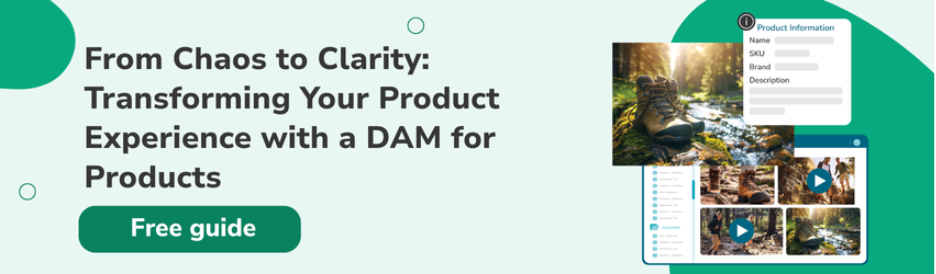
Organize your digital assets and product details with Canto DAM for Products
Canto DAM for Products is an industry-leading, product-first platform that centralizes your product information and digital assets, providing a reliable single source of truth for your organization. With advanced tools for collaboration, automated workflows, and real-time updates, Canto DAM for Products equips your teams to move quickly and accurately across channels.
The result? Faster time to market, enhanced brand consistency, and maximized content ROI, all with a platform that scales with your business.
What makes Canto DAM for Products unique:
- Product-first DAM solution that organizes your valuable digital assets and product information around your products
- Custom attributes and metadata fields provide important information about products and assets for internal and external users. Canto AI features automatically tag content in the library
- Powerful search tools, like AI Visual Search, find assets and products anywhere in the platform
- Manage and collaborate effectively with Workflows, Style Guides, and Digital Rights Management tools
- Share assets and curate product sets with brand portals and Product Catalogs
- Deliver specially tailored assets and products to channels using Media Publisher and Channel Mapping
- 40+ integrations to leading work management, productivity, collaboration, creative tools, CMS, social media platforms, and more
PIM system frequently asked questions
What is a PIM system (PIMS)?
A PIM system (product information management system or PIMS) is a solution organizations use to improve product processes. A PIMS centralizes, organizes, and distributes accurate product attributes across teams and channels.
What is a PIM?
A PIM, also known as a product information management system, is a software solution used to centralize product attributes, improving product processes and product information accuracy.
What is PIM software?
PIM software is a platform used by organizations to centralize, organize, and distribute product information across marketing, sales, and channels. PIM software vastly improves product information accuracy, reliability, and accessibility.