
What are the best tools for brand management and digital branding?
| March 20, 2026
What are brand management and digital branding tools?
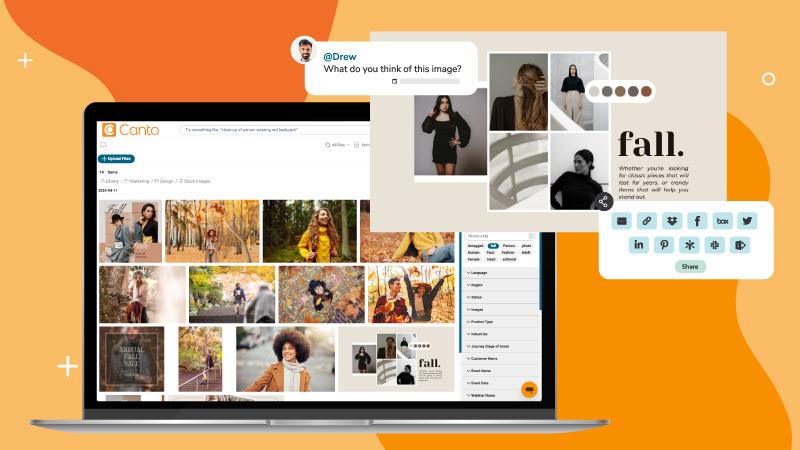
Brand management is the continuous practice of shaping how audiences perceive, experience, and trust your brand, including the management of logos, imagery, colors, voice, messaging, and differentiation. A well-managed brand enhances consumer trust and credibility, making customers more likely to choose it over competitors.
Brand management tools are software platforms that help organizations control how their brand is perceived across every customer touchpoint — managing logos, imagery, color systems, voice, messaging, and asset distribution. They centralize brand governance and enforce brand consistency at scale. Brand management tools can help organizations build emotional connections with consumers, which is vital for long-term loyalty. Digital branding tools extend those capabilities into online environments, cultivating a unified brand presence through content creation, social media management, SEO / website experiences, and analytics.
Brand management and digital brand tools are not general project management software, generic file storage, or standalone design apps. Their defining function is enforcing brand standards through approval workflows, access controls, and a single source of truth for approved assets.
Together, brand management and digital branding tools form the foundation for building, protecting, and growing a brand’s market presence in today’s digital landscape. Canto’s guide provides a comprehensive overview of the essential tools that empower organizations to execute effective brand management and digital branding strategies. Whether you’re a marketing manager, brand manager, or part of a creative team at a startup or enterprise, this guide will help you identify the right brand management tools to meet your organization’s unique needs and elevate your brand’s impact.
Why does brand management software matter?
Consistent branding can increase revenue by up to 10-20% (Marq). A comprehensive brand management strategy is essential for aligning content and workflows, enabling organizations to achieve a cohesive brand presence across multiple channels and teams. Brand management tools serve as the infrastructure that enables creative and marketing teams to execute brand strategy consistently across every customer interaction at scale.
Effective brand management software solves three core problems:
Centralization
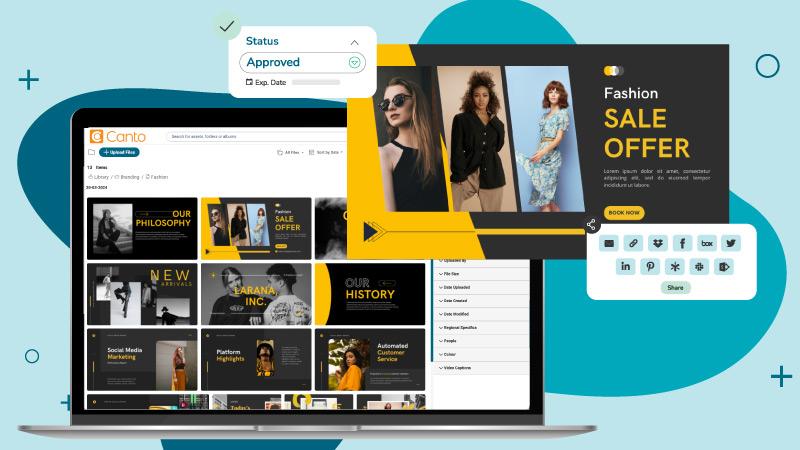
Brand management tools provide centralized storage and organization capabilities that enable marketing teams to manage brand and digital assets from a single source of truth — eliminating version confusion and ensuring every team member accesses the latest, approved materials.
Governance
Modern brand management software enforces brand compliance through automated workflows, approval chains, and template systems, preventing off-brand content from reaching customers. This governance layer is especially critical for organizations managing multiple social media accounts, regional variations, or franchise operations where brand consistency directly correlates with revenue performance.
Analytics
Brand management tools generate valuable insights through advanced analytics that track how brand assets perform, which team members use them, and where brand guidelines are most frequently violated, enabling data-driven decisions on brand governance improvements.
Overall, these platforms centralize brand assets, enforce brand guidelines, and provide the workflows necessary to scale brand operations without sacrificing quality or coherence.
How are brand management and digital branding tools organized?
Digital branding tools fall into two primary clusters:
- Strategy and planning tools, which establish brand positioning, messaging frameworks, and customer journey maps
- Content execution tools, which translate that strategy into designed assets, published content, and governed distribution.
| Category | Primary function | Example tools |
| Strategy & planning | Brand positioning frameworks, messaging docs, customer journey maps, creating and updating brand style guides | Notion, Miro, Lucidchart |
| Visual identity & design | Visual identity and logo systems, templates, social media graphics, campaign assets | Adobe Creative Cloud, Figma, Canva |
| Social media management | Scheduling, monitoring, engagement | Hootsuite, Sprout Social, Buffer |
| Content & SEO | Discoverability, content optimization, backlinks | SEMRush, Ahrefs, HubSpot |
| Brand monitoring | Reputation tracking, sentiment analysis, crisis detection | Brandwatch, Mention, Google Alerts |
| Digital asset management (DAM) | Centralized content creation, organization, collaboration, distribution, and governance | Canto |
The connection between these categories is critical: without strong strategy documentation, content execution tools produce inconsistent outputs; without capable design platforms, strategy remains theoretical. Understanding this relationship between planning and execution tools establishes the framework for building an integrated brand management stack that serves your organization’s specific needs.
How to build your brand management and digital branding tool stack
Successful brand management implementations often involve leveraging specific tools to enhance brand consistency and communication across teams. When selecting brand management tools, it’s important to evaluate key features across categories that support your branding goals. A comprehensive suite of brand management and digital branding tools help companies differentiate themselves in crowded markets by establishing a unique identity and ensuring their visual identity and messaging remain consistent across all digital marketing assets and channels.
Brand strategy and planning tools
Strategy and planning tools establish the foundational brand decisions that every downstream execution depends on.
- Notion serves as a versatile workspace for creating positioning documents and messaging frameworks. Its database features allow customizable templates for mood boards and competitive analyses. The platform’s flexibility makes it ideal for startups and SMEs establishing initial brand governance structures.
- Miro excels at visual collaboration for brand workshops and customer journey mapping, offering infinite canvases with sticky notes, voting tools, and real-time ideation. Its frame feature organizes outputs into shareable decks, facilitating team collaboration across departments.
- Lucidchart provides advanced diagramming for brand architecture, including org charts for sub-brands, portfolio matrices, and process flows. Data-linked visuals update dynamically from spreadsheets, making it valuable for enterprises managing complex, multi-product brand ecosystems.
Takeaway: Brand guidelines ensure consistency across all branding efforts by providing context on brand usage. Once brand storyboarding and visual identity are created, store brand guidelines in a centralized DAM system alongside your brand assets to ensure teams always work from current standards.
Visual identity and design platforms
The right design tool depends on your team’s skill level and workflow integration needs.
- Adobe Creative Cloud (Illustrator, Photoshop, InDesign) enables advanced AI-powered features, such as batch editing, automated selections, and Neural Filters in tools like Adobe Photoshop. Individual apps start around $20.99 per month, while the full Adobe Creative Cloud suite begins at $59.99 per month, positioning the platform primarily for professional creative teams with advanced design needs.
- Figma has revolutionized collaborative UI/UX design for brand systems. Components and variants enable reusable design tokens for apps and websites, while auto-layout and Dev Mode bridge the gap between design and development.
- Canva democratizes design for non-designers through drag-and-drop interfaces. Canva offers brand kits to lock in logos and colors for quick and collaborative design, and over 100,000 templates for social media graphics and marketing campaigns.
Takeaway: Identify tooling that integrates with your existing marketing tech stack to enable cohesive brand management and digital branding.
Social media management
Social media management is essential for building brand awareness and requires consistent effort. Maintaining a consistent brand voice across various platforms with your social media assets requires tools that centralize scheduling, monitoring, and engagement workflows.
- Hootsuite manages 20+ social networks with bulk scheduling and unified inboxes. Its scheduling posts capability enables users to plan, publish, and manage their content in advance for better engagement and efficiency. Its streams monitor brand mentions in real time, while custom reports track social media performance and ROI.
- Sprout Social integrates social listening, publishing, and customer relationship management into a single platform. Sentiment analysis flags potential crises before they escalate, while audience insights reveal engagement patterns.
- Buffer simplifies social media management for smaller marketing teams by combining scheduling, content planning, and analytics into a single platform. Its AI Assistant helps marketers generate ideas, write and refine posts, and repurpose content for different platforms, with company data showing that AI-assisted posts receive 22% higher engagement than those created without AI support. Paid plans start at $6 per channel per month, making it an accessible option for startups and lean social media teams.
- Meta Business Suite and LinkedIn Analytics also provide detailed audience engagement data, helping teams refine their overall social strategy.
Takeaway: The right tool scales with team size. Buffer for lean teams, Hootsuite for multi-network operations at scale, Sprout Social when social data needs to connect with broader customer relationship management.
Content creation and SEO optimization
Building digital brand authority in search requires technical optimization, keyword strategy, and content gap analysis — not just content volume. These tasks require tools that optimize discoverability and measure content performance across marketing channels.
- SEMrush offers more than 55 tools for site audits, rank tracking, keyword strategy, and content optimization. Its platform draws on one of the largest SEO datasets in the industry, including over 26 billion keywords and more than 43 trillion backlinks, giving marketers extensive data for competitor research and search visibility analysis.
- Ahrefs excels in backlink analysis and Content Explorer for identifying content gaps in your market. Site Audit automatically identifies and prioritizes technical issues affecting brand visibility. It’s particularly valuable for teams focused on building brand authority through content marketing.
- HubSpot provides an all-in-one hub that automates email campaigns and blog publishing with integrated SEO recommendations.
Takeaway: SEMrush and Ahrefs both serve content and SEO optimization, but from different strengths. SEMrush is broader; Ahrefs goes deeper on backlinks and content competitive analysis. HubSpot is the right choice when content and CRM need to operate together.
Brand monitoring and reputation management
Protecting brand equity with strong reputation management requires continuous monitoring of online conversations and proactive crisis detection.
- Google Alerts offers basic, free brand-mention monitoring — sufficient for small organizations with limited monitoring needs. Set alerts for your brand name and product names to receive daily digests of new mentions across the web.
- Mention scans over 1 billion sources for brand mentions and competitive intelligence, providing real-time alerts that enable rapid response to customer service issues or emerging brand conversations. Its monitoring spans social media platforms, news sites, forums, and review platforms.
- Brandwatch uses AI-powered sentiment analysis and social listening to detect emerging reputation risks across digital channels. Brandwatch analyzes 1.7 trillion historical conversations and processes roughly 501 million new conversations every day, drawing insights from over 100 million online sources, including social networks, blogs, forums, and news sites. This large-scale dataset enables enterprise teams to identify conversation spikes, track sentiment trends, and respond quickly to potential brand crises.
Takeaway: Match monitoring depth to brand risk exposure. High-volume consumer brands or organizations in sensitive industries need Brandwatch-level coverage; early-stage companies can start with Mention or Google Alerts.

Why is digital asset management (DAM) central to brand operations?
Effective brand management tools should have a centralized repository where all your brand assets are organized and stored. DAM software is the operational layer that makes every other brand management software more effective.
A digital asset management platform stores, organizes, searches, manages, and distributes your brand’s digital assets. A DAM system enhances the user experience and improves overall asset management, making it easier to maintain brand consistency across all platforms. Without it, the outputs of your strategy, design, social, and content tools sit in disconnected locations, making enforcement of brand standards impractical at scale.
DAM software delivers four distinct operational benefits:
- Ensuring teams always access the latest, approved versions of brand assets. Digital Asset Management (DAM) features like auto-tagging and filtering enhance the user experience, improving asset management.
- Embedding brand guidelines directly into production workflows. DAM software’s brand management tools enhance collaboration among employees and partners, enabling effective teamwork on brand projects.
- Enforcing permission controls that govern who can access, edit, or distribute assets. Role-based access ensures sensitive or in-progress materials never reach the wrong hands — internal or external.
- Reducing time spent locating assets, freeing creative teams for production. When assets are organized, tagged, and searchable, teams spend less time hunting and more time building.
Canto is a leading DAM platform for brand management, with a robust suite of brand governance and AI-powered tools to create, manage, and protect your brand assets across channels.
Maintaining brand consistency not only strengthens brand recognition with your target audience but also builds trust and credibility — key drivers of customer brand loyalty and long-term revenue growth. By leveraging Canto and robust brand management strategies, organizations can ensure that every customer interaction reflects the brand values and promise, no matter where or how it occurs.
How should organizations choose brand management tools by company size?
Selecting the right tools requires matching platform capabilities to your organization’s size, budget, and brand complexity. It’s essential to consider the long-term operational costs when selecting brand management software, as some solutions require ongoing maintenance and updates. Resources such as a guide to choosing the right DAM system can further inform these decisions. The following framework provides specific recommendations for each company stage.
| Company size | Strategy tools | Design tools | Social management | Analytics | Brand asset management orchestration |
|---|---|---|---|---|---|
| Startup | Notion | Canva | Buffer | Google analytics | Canto |
| SME | Miro + Notion | Figma | Hootsuite | SEMrush | |
| Enterprise | Lucidchart suite | Adobe Creative Cloud | Sprout social | Brandwatch + Tableau |
Startups can use Canva, Buffer, Notion, and Google Analytics to provide essential capabilities at minimal cost, allowing marketing efforts to focus on brand building rather than tool management. Investing in a DAM software solution as a startup can provide numerous brand management benefits, including increasing content ROI, ensuring omnichannel brand consistency, streamlining brand governance and approval workflows, and giving you a leg up on the competition with a solid brand identity from the start.
Small- to medium-sized enterprises (SMEs) benefit from scaling into more sophisticated platforms as team size and brand complexity grow. Figma replaces Canva for teams with design expertise; HubSpot or SEMrush adds marketing automation capabilities; and Canto DAM prevents the asset chaos that emerges around 20-50 employees.
Enterprise organizations require robust governance, advanced analytics, and integration across the martech stack. Expect investments of $50K+ annually for comprehensive brand management platforms that handle global brand operations, complex approval workflows, and real-time brand performance measurement.
What does an effective brand management ecosystem look like?
Choosing the best brand management and digital branding tools isn’t about assembling a long list of software — it’s about creating an integrated system that turns brand strategy into consistent, scalable execution. Integration capability leads to streamlined workflows, reducing time spent on manual data entry and ensuring real-time updates across systems.
When these tools work together, they transform brand management from a reactive process into a proactive growth engine. Here’s what effective brand operations look like in practice:
- Centralized brand control: A single source of truth for guidelines, messaging, and digital assets
- Streamlined creative workflows: Systems that connect strategy, design, distribution, and management in one workflow
- Built-in governance: Approval processes, permissions, and monitoring tools that protect brand integrity
- Cross-channel consistency: Unified messaging and visual identity across every social platform, website, and campaign
- Measurable performance impact: Analytics that link brand consistency to engagement, visibility, and revenue outcomes
When choosing brand management software, it’s crucial to consider how well the tool integrates with your existing apps and tools. High-performing organizations treat brand management as long-term infrastructure — not a one-time rollout. They audit their current stack, close capability gaps, and prioritize foundational systems, such as digital asset management platforms, before adding advanced tools.
Canto: The foundation of a successful brand management stack
Brand management is where Canto stands out: Canto’s leading digital asset management platform centralizes approved assets, streamlines approvals, integrates with your existing marketing stack, and enables teams to find and distribute content instantly.
Thanks to these features, Canto acts as the operational backbone that connects strategy to execution for businesses managing hundreds, thousands, or millions of digital assets.
Canto provides a full brand management suite to create, approve, organize, find, and share content at scale while staying on brand:
- Canto DAM: Award-winning DAM software built for fast-moving marketing and creative teams to manage their brand at scale, including powerful AI tools, unlimited Portals, and version control
- Canto Brand Studio: Create, localize, and adapt AI-powered brand templates, keeping content fresh while providing brand guardrails
- Canto Approval Hub: Centralize proofing, pixel-level comparisons, versioning, and approvals to stay on brand and accelerate brand asset production
- Canto AI Library Assistant: Sort and categorize uploads automatically and get AI-assisted metadata suggestions across your library
- Canto AI Visual Search: Discover brand assets, video clips, brand imagery, and more across your library using natural language queries
- Canto Media Publisher: Deliver approved, formatted photography and videos to your websites, storefronts, and platforms automatically
Strong brands aren’t built through disconnected campaigns, but through repeatable systems anchored by the right DAM platform — ensuring every asset, message, and interaction reinforces your story, values, and differentiation across every channel.
Brand management and digital branding tools: Frequently asked questions
What is the difference between brand management and digital branding?
Brand management refers to the ongoing practice of shaping brand perception across all channels – governing assets, voice, and visual identity. Digital branding is the application of those principles specifically within online environments, including websites, social media, SEO, and content.
What tools do brand managers use most?
Brand managers most commonly use design tools (Adobe Creative Cloud, Figma, Canva), social media management platforms (Hootsuite, Sprout Social), and digital asset management software (Canto) to execute and govern brand activity.
Is a DAM platform the same as cloud storage?
No. Cloud storage (Google Drive, Dropbox) organizes files without additional comprehensive brand management and digital branding capabilities. A DAM platform governs brand assets — with approval workflows, permission controls, metadata tagging, brand guidelines enforcement, and distribution capabilities that cloud storage does not provide.
When should a company invest in enterprise brand management tools?
The practical trigger points are:
- Multiple teams or regions producing brand content independently
- Recurring off-brand content reaching customers
- Significant time lost locating approved assets.
These issues typically emerge between 20-100 employees depending on content volume.
What is the most important brand management tool to implement first?
A digital asset management (DAM) platform. It creates the single source of truth that makes every other tool in the stack more effective, ensuring that design outputs, social content, and campaign assets are governed from one place.