Digital content trends 2026: Five insights reshaping how content teams scale

Content teams have officially crossed a tipping point.
Volume is up. Budgets are rising. AI is everywhere. And yet, for many organizations, the systems behind content operations haven’t kept pace with the scale of demand. The result is one of the defining digital content trends of 2026: teams are producing more than ever, but struggling to keep up with volume demands, stay consistent, and prove ROI.
To better understand today’s biggest content operations challenges, we surveyed 434 content and creative professionals compiled The State of Digital Content: 2026 Edition, in partnership with Ascend2. The findings reveal a widening gap between teams confidently scaling content and those feeling increasing operational strain.
The takeaway is clear: success in 2026 isn’t just about creating more content. It’s about building your operations to support it.
Let’s dive into the most important digital content trends 2026 from the report to get a better picture of where content is headed this year and how teams can maintain content team productivity as demands grow.

1. The content boom is accelerating
Content production continues to surge across channels, formats, and teams. In the past year alone, 82% of teams increased content output, with nearly one in three reporting a significant jump. Digital content marketing budgets are rising to meet demand, and organizations are doubling down on content as a growth lever.

As a key part of this every-increasing content volume, AI has become both the accelerator and the safety valve. More than half of content teams now rely on AI to speed up creation, tagging, and organization — a key signal reflected in this year’s AI content production statistics.
For many, AI is no longer experimental — it’s foundational.
2. Content operations are under pressure
Despite heavier investment and widespread AI adoption, many teams are still constrained by fragmented workflows and disconnected systems.
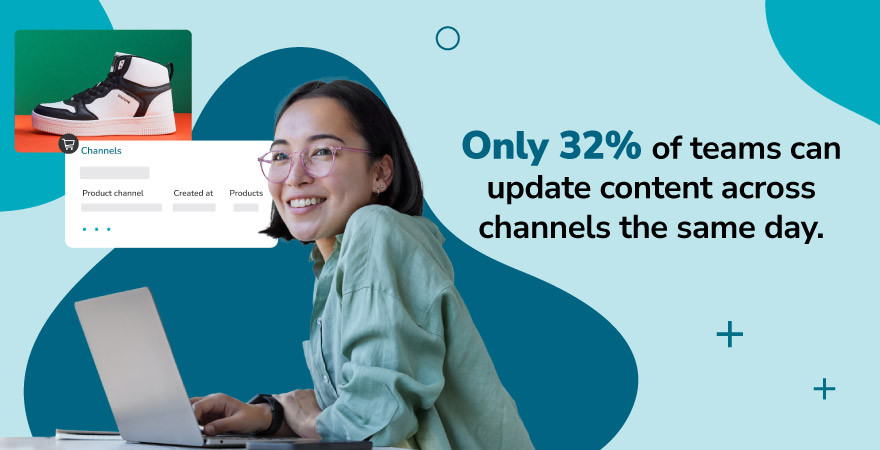
Only 32% of organizations can update content across channels the same day, leaving most teams operating with delays that slow product launches and introduce risk.
Behind the scenes, operational maturity remains uneven. Just 43% of teams describe their workflows as standardized, automated, and consistently efficient. Everyone else is navigating potentially error-prone documentation, manual handoffs, and workarounds that don’t scale — all core content operations challenges facing teams in 2026.
The result isn’t just operational friction — it’s real business impact, from duplicated work to missed revenue opportunities.
3. Fragmented systems are holding teams back
As content ecosystems expand, where assets live — and how easily they can be found — matters more than ever. Yet most organizations still rely on multiple, overlapping systems for digital content management.
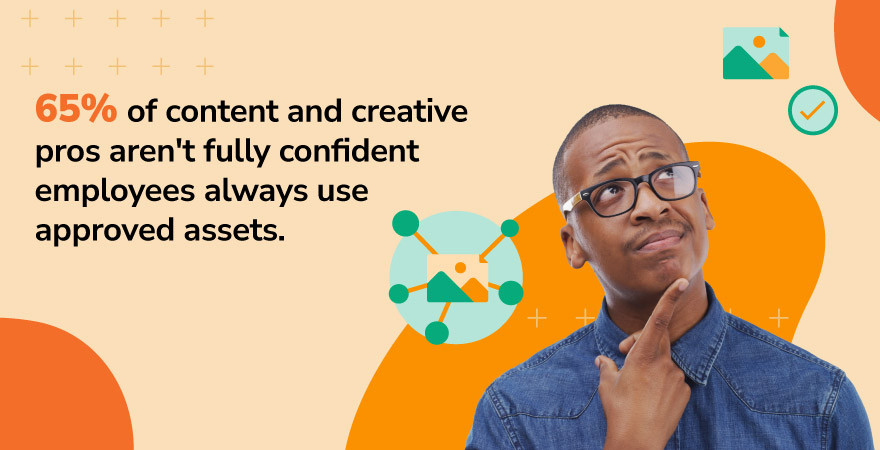
Teams working across decentralized environments report higher levels of burnout, wasted budget, and slower updates across channels. Confidence in brand management is also shaky: 65% of content and creative professionals aren’t fully confident employees always use the right content at the right time. Brand management is the continuous practice of shaping how audiences perceive, experience, and trust your brand, including the management of logos, imagery, colors, voice, messaging, and differentiation — and when teams lack confidence in how content is used, that trust is put at risk.
At the same time, product content has become a growing pressure point. Accuracy and consistency are critical for trust and sales, but most teams manage product information separately from their digital assets, increasing the risk of outdated or conflicting content across channels.
4. ROI favors connected, mature content operations
The strongest signal in this year’s data is the link between operational maturity and performance.
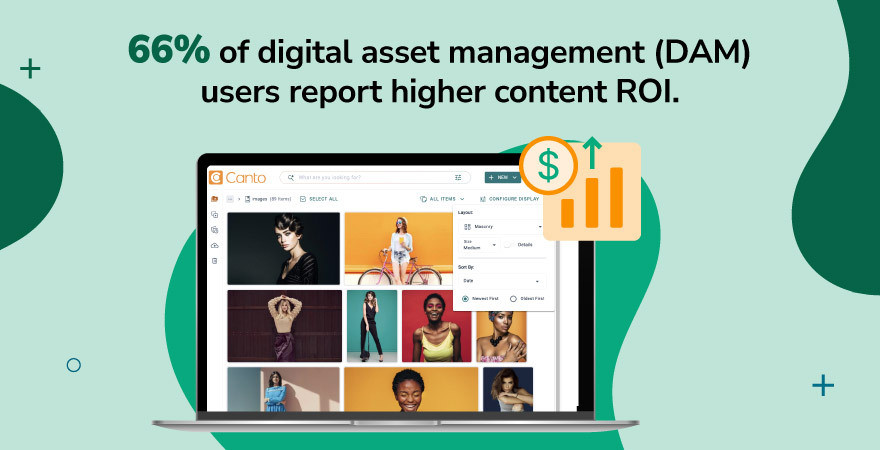
Teams using digital asset management (DAM) software are significantly more likely to report higher content ROI, with 66% of DAM users seeing stronger returns — a clear indicator of rising digital asset management adoption across high-performing teams. A digital asset management platform stores, organizes, searches, manages, and distributes your brand’s digital assets, making it a natural foundation for teams looking to centralize content and scale efficiently. In 2026, instituting DAM software as a centralized content hub is a real competitive advantage with a host of content management benefits.
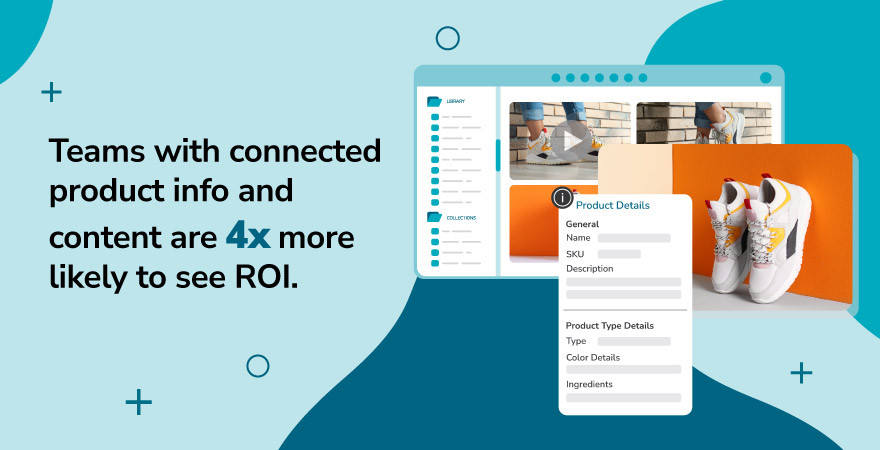
The impact is even more pronounced when product information and content live in connected environments: organizations with fully integrated product content and digital assets are over 4x more likely to see significant ROI gains.
Workflow maturity compounds the effect. Teams with advanced, automated workflows are dramatically more likely (48%) to report meaningful improvements in ROI compared to those working with partially developed (14%) or ad hoc processes (0%).
5. Operational maturity is the real differentiator in 2026
The State of Digital Content 2026 makes one thing clear: improving operational maturity is the best way to improve ROI.
Leaders are investing in standardized workflows, centralized systems, and AI-powered operations that reduce friction, optimize their marketing stack, and enable speed without sacrificing quality. Others are feeling the weight of rising volume layered onto tools and processes that were never designed to scale.
As content expectations continue to rise, the question for teams isn’t whether they’ll produce more. It’s where their operations are ready to support it.
Want the full story with the data to back it up?