
AI brand management: What it is, how it works, and why human judgment matters
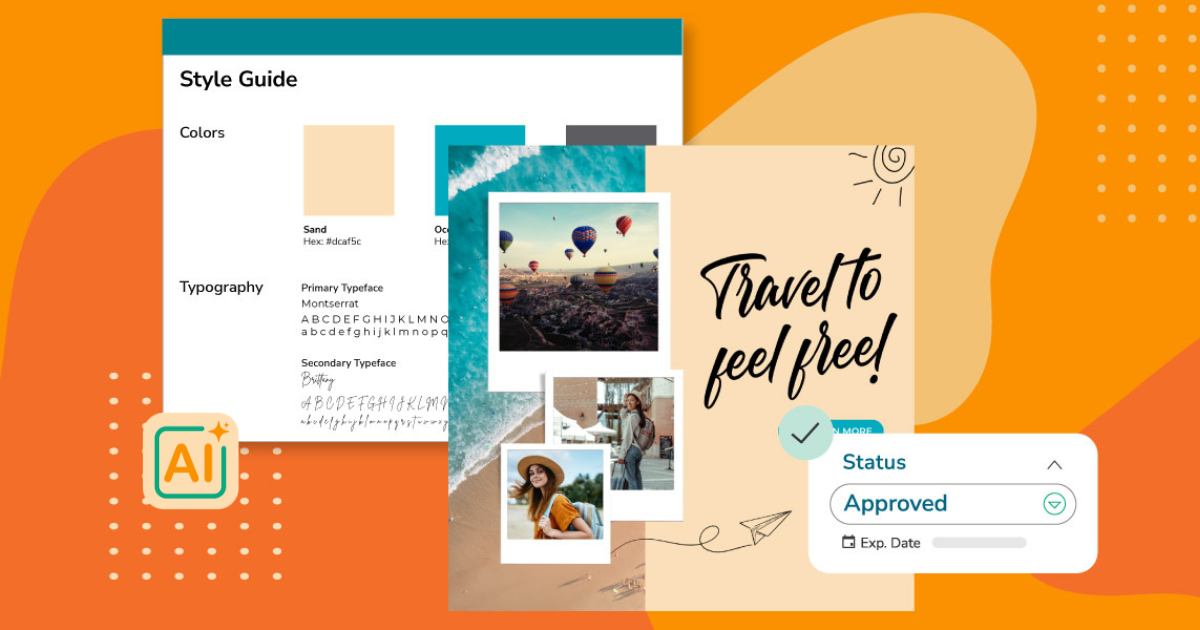
AI brand management applies automation and machine learning to tasks like flagging off-brand assets before they go live, routing approvals without the tedious manual work, and tagging and surfacing content at a scale human-only teams can’t match.
This is brand automation in practice: rules-based systems doing the repetitive work so people don’t have to. It doesn’t replace the creative judgment, strategic decisions, or the relationships that make a brand identity meaningful. But it does free up time for those things.
This guide explains what AI brand management actually includes, where it makes a measurable difference, and how to build a system that keeps humans in control of the decisions that matter most. For a broader overview, read the complete guide to brand management.
What AI brand management means in practice
AI brand management uses automation to govern how brand assets are organized, accessed, approved, and distributed. It is not a single tool or a category of software on its own. Rather, it’s a set of capabilities that increasingly appear inside digital asset management (DAM) platforms; features like brand portals and approval systems. The result is automated brand governance: a system that enforces brand standards consistently, without depending on every team member to remember the rules.
In practical terms, AI brand management typically covers:
- Asset tagging and organization. AI automatically applies metadata, Smart Tags, and categories to incoming files so teams can find what they need without relying on whoever uploaded the file to label it correctly.
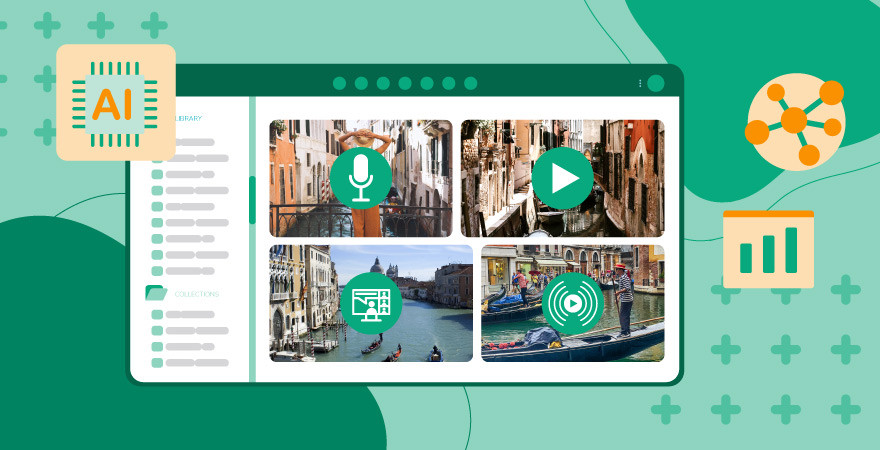
- Visual search. Instead of browsing folders, team members search by color, subject, or visual similarity. This is especially useful for large libraries where file names are inconsistent.
- Approval routing. Workflows automatically move assets through review stages, notify the right people, and log sign-off, without anyone manually tracking where a file is in the process.
- Expiration and rights management. Assets with expiration dates or usage restrictions are flagged or removed from circulation automatically, reducing the risk of someone using an outdated logo or a photo whose license has lapsed.
- Template-based content creation. Brand-approved templates give non-designers a structured path to produce on-brand content without requiring design review for every output.
- Channel distribution. Automated publishing routed final assets to the right channels in the right formats, removing the manual step of reformatting and uploading content in each destination.
Why brand governance gets harder as teams grow
Brand consistency does not usually break down because teams do not care about it. It breaks down because the volume of content outpaces the systems available to manage it.
A team of five can easily enforce brand standards through basic systems. A distributed organization running campaigns across regions, channels, and partner networks cannot. The same guidelines exist, but the gap between what the guidelines say and what actually gets published widens with every new team member, market, and content type.
AI does not solve the strategy problem. Brand positioning, messaging hierarchy, and creative direction still require people. What automation addresses is the operational gap between good brand standards and consistent execution at scale. Brand automation closes the gap by making governance a system rather than a manual effort.
Where AI makes the biggest difference in brand management
Finding the right asset faster
Most brand inconsistency doesn’t come from people ignoring guidelines. It comes from people who can’t find the approved file and use what they already have. AI-powered search, Smart Tags, and visual similarity matching change that equation. When the right asset surfaces in seconds rather than minutes, or hours, teams are more likely to use it.
Keeping content libraries from becoming outdated
Manual content audits are resource-intensive and rarely happen often enough. AI can flag assets approaching expiration dates, identify duplicate files, and surface content that has not been accessed recently. This keeps a library current without requiring a quarterly audit by a human team.
Scaling content production without scaling headcount
Template automation allows marketing teams, regional offices, and agency partners to produce on-brand content without routing every request through the design team. The brand team builds the approved templates once. AI handles localization and format adaptation for different markets and channels. The design team focuses on net-new creative rather than resizing and reformatting.
Reducing the volume of reactive brand fixes
Automated approval workflows catch problems before content goes live rather than after. When an asset requires sign-off from a brand manager or legal reviewer, the brand management software routes it automatically and tracks whether approval was granted. This reduces the number of off-brand assets that make it into public-facing channels in the first place.
Where human judgement cannot be automated
AI brand management works best as a governance layer, not a creative director. There are decisions it cannot make.
- Brand strategy. What a brand stands for, how it should evolve, and which audiences to prioritize are human decisions. AI can surface data to inform those decisions, but it cannot make them.
- Creative judgement. Whether a campaign concept is right for the brand, whether a piece of copy captures the right tone, whether a visual direction will resonate with a target audience: these require people with knowledge of the brand, the audience, and the cultural context.
- Exception handling. Automated systems are good at applying consistent rules. They are not good at recognizing when a rule should bend, when context changes the right answer, or when a situation falls outside the scenarios that the system was built for.
- Ethical and reputational decisions. Whether to proceed with a piece of content, pull an asset from circulation, or change brand direction in response to a cultural moment requires human accountability.
The teams getting the most value from AI brand management are the ones that define these boundaries clearly. They automate the repetitive governance tasks and keep humans responsible for the decisions that carry real business risk.
What a working AI brand management system looks like
Effective AI brand management is not a single tool. It’s a connected system built on three foundations:
A governed asset library
AI cannot govern assets it cannot find. The starting point is a centralized DAM platform where all approved brand content lives, every asset carries the right metadata, and access is controlled by role. This is the content infrastructure that makes automation possible.
Embedded brand guidelines
Brand guidelines that live in a PDF that no one opens are not enforced guidelines. Effective AI brand management connects standards directly to the assets and workflows they govern. Style guides, approved templates, and usage rules are built into the same system where people access and create content, not stored separately and referenced occasionally.
Automated workflows with human review points
Automation handles the routing, tracking, and notification. Human reviewers handle the judgement calls. The design is intentional: automate everything that does not require a decision, and make the decisions that do require human review as easy as possible to act on. For high-stakes content, that means building explicit approval gates into the workflow rather than trusting that people will self-police.
Getting started with AI brand management
Brand automation only works as well as the content foundation underneath it. Teams that try to build governance workflows without a clean, centralized library typically don’t get far. The AI tags files it can access. The workflows route assets stored in the system. If the asset library is disorganized or incomplete, automation makes a disorganized library move faster, not better.
A practical starting sequence:
- Centralize approved assets. Before building workflows, consolidate brand content into a single governed DAM library. Shared drives and email threads are not a foundation for automation.
- Define ownership and access. Establish who owns which content, who can approve what, and which teams need access to which assets. Automated workflows depend on these decisions being made in advance.
- Brand guidelines into the system. Move brand standards out of standalone documents and into the platform where people access and create content.
- Start with high-volume, low-complexity workflows. Automate approval routing for asset categories where the rules are clear and the volume is high. Expand from there as the system proves reliable.
- Keep humans in the loop for exception handling. Every automated system needs a path for edge cases. Define who handles situations the automation cannot resolve.
How Canto enables AI brand management
Canto DAM has steadily evolved and pushed the definition of AI digital asset management forwards. Today, Canto AI is embedded across the platform brand teams rely on every day: Canto AI Library Assistant sorts incoming content while Canto AI Visual Search keeps anything in your library findable at scale, Canto Brand Studio gives non-designers access to approved, AI-adaptable templates, Canto Approval Hub automates review routing and sign-off, and Canto Media Publisher delivers approved content to the right channels in the right format automatically.
To learn more about what Canto has to offer take a product tour or sign up for a customized demo.
Frequently asked questions about AI brand management
What is the difference between AI brand management and traditional brand management?
Traditional brand management relies on manual processes: shared drives, PDF guidelines, and periodic reviews. AI brand management automates the operational layer — asset tagging, approval routing, expiration tracking, and content distribution — so teams spend less time enforcing standards and more time on the creative and strategic work that requires human judgment.
Do you need a DAM platform to use AI brand management?
Not every AI brand management capability requires a DAM, but the most effective implementations are built on one. A governed, centralized asset library is the foundation that makes automation reliable. Without it, AI tools tag and route assets that teams cannot consistently find or trust, which limits the value of any governance layer built on top. Automated brand governance at scale requires the asset library and the governance layer to be part of the same system, not bolted together from separate tools.
What brand management tasks can AI not automate?
AI handles repetitive, rule-based governance well: tagging, routing, flagging, and distributing. It cannot make strategic decisions about brand direction, exercise creative judgment, handle reputational situations that fall outside defined rules, or take accountability for how a brand shows up in the world. Those decisions require people.